TAKE BACK YOUR OUTDOORS
Are mosquitoes making the yard hard to enjoy while fleas, ticks, or household pests keep coming back? My Organic Turf identifies where activity is concentrated and provides targeted pest control for Tampa homes and outdoor spaces.
We handle mosquitoes, fleas, ticks, and common pests found near foundations, entry points, damp landscaping, and shaded areas. Instead of spraying the entire property, we focus on the places pests use for shelter, breeding, and access.
WHAT YOUR SERVICE INCLUDES?
Tell us where the pests show up and when the activity is worst. Mosquitoes after rain, fleas near a pet area, ants beside one window, or bugs appearing in a bathroom all point us toward different parts of the property.
We also ask how long the problem has been happening and what you have already tried. Those details help us avoid repeating what hasn't worked.
Our inspection covers the places connected to the complaint. For mosquitoes, that can mean shaded plants, containers, drains, and low areas. For household pests, we focus on the foundation, exterior openings, pipes, vents, doors, and windows.
We note patios, play equipment, vegetable gardens, pools, and pet spaces before service begins. These areas affect how and where we work.
Recommendations may include mosquito control, flea and tick treatment, exterior household pest service, or a combination of services. What we suggest depends on the pest and where we find it.
There is no reason to treat a hot, open stretch of lawn like a damp bed of shrubs. We treat each only when the inspection shows it is connected to the activity.
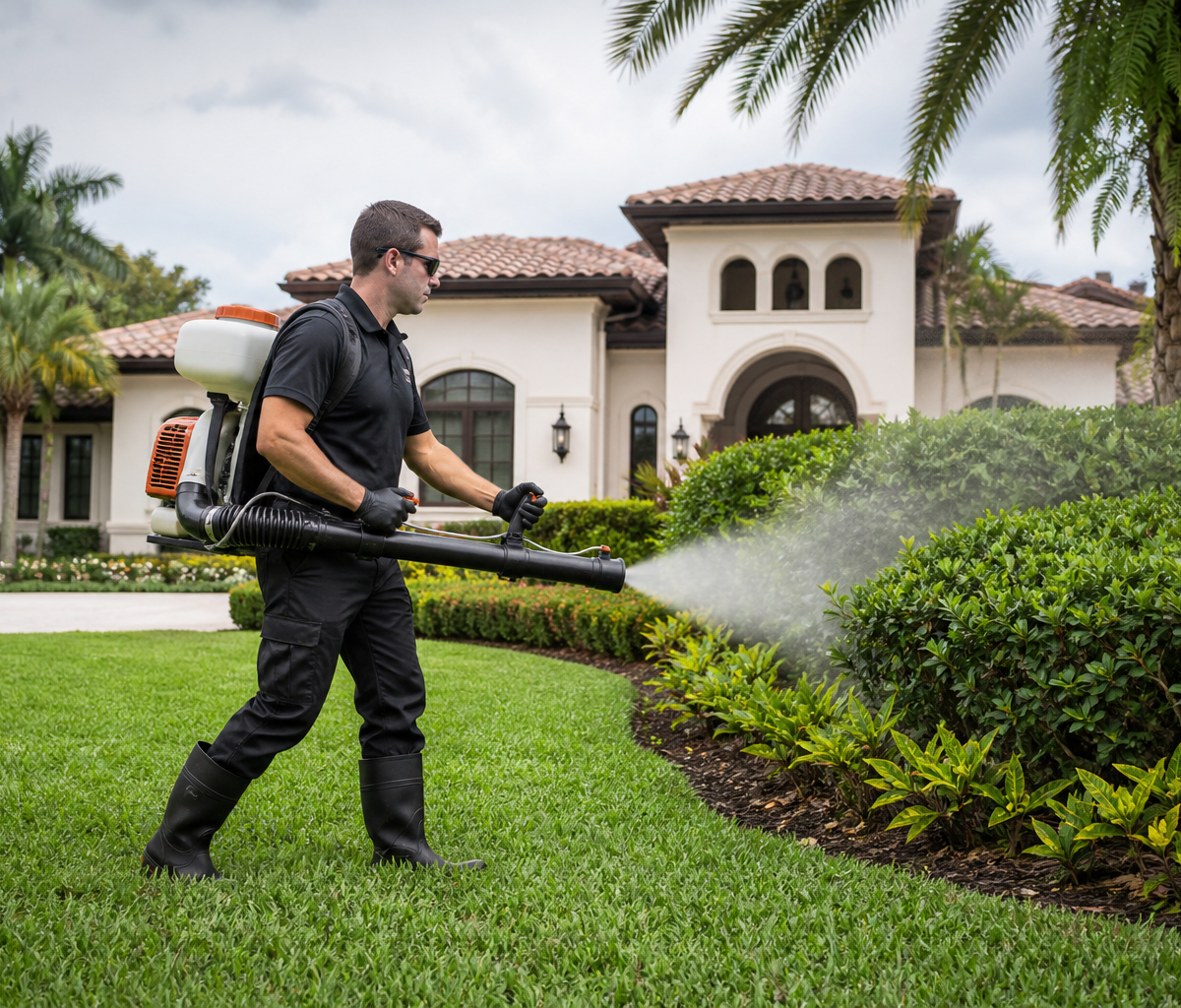
Treatment goes where pests rest, travel, breed, or approach the home. That often means selected vegetation, shaded landscaping, exterior cracks, and the structure's perimeter.
We work around gardens, play areas, pet spaces, and other parts of the yard that require extra care. We don't spray the entire property with broad, routine applications.
Before we leave, you will know when treated areas can be used again and whether mowing, watering, or trimming should wait.
We also point out conditions that could bring the problem back. That may be a dripping faucet, a container holding water, plants touching the house, or a visible opening near a utility line.
Pests move. Rain, drought, landscape growth, and nearby properties can shift where they gather from one visit to the next.
Recurring service lets us follow those changes. If mosquitoes move from the back shrubs to a shaded side yard, or ants start appearing near another entry, we can adjust the next visit instead of simply repeating the previous application.
AFTER YOUR PEST SERVICE
Follow the instructions left by our team. Re-entry time and aftercare can vary with the service, weather, and areas treated.
Keep children and pets away until the treatment has dried or the stated re-entry time has passed. We will tell you when you can resume normal use.
Avoid touching, rinsing, or walking through treated areas before then.
Mowing, irrigation, and trimming may disturb an exterior treatment if completed too soon. Follow the waiting period provided after the visit.
A quick shower and a hard downpour don’t affect every application the same way. Call us if heavy rain starts soon after service and you are unsure whether you need a follow-up.
Walk the property after rain and check anything that can hold water. Common places to check include buckets, toys, tarps, plant saucers, wheelbarrows, and clogged drains.
Birdbaths and pet bowls can remain in use, but change the water regularly. Scrub the container before refilling to remove buildup along the sides.
A leaking faucet, damaged sprinkler, or blocked gutter can keep an area damp day after day. Repairing that issue removes a condition that may continue drawing pests toward the property.
Check mulch and soil beside the foundation, too. Areas that never seem to dry deserve attention.
Seeing an occasional pest after service does not always mean the treatment failed. However, report heavy activity, a new concentration, or pests returning quickly.
A clear location helps. “Ants beside the kitchen window” gives us more to work with than “bugs are back.”
Tampa does not get a long break from insects. Pest pressure changes through the year, but it rarely disappears completely.
Summer rain can create new mosquito breeding sites within days. Dry weather may push ants closer to buildings in search of moisture. Cooler periods can change where pests hide.
Recurring visits let the service follow those seasonal shifts.
A small trail of ants or a few mosquitoes in one corner of the yard may be easier to address before the activity spreads. Regular checks provide more chances to catch those changes.
Mosquitoes can fly in from surrounding properties, drainage areas, and public spaces. New rainwater can also restart activity on your own property.
Scheduled treatment reduces mosquitoes resting in treated areas, while regular water removal limits places where more can develop.
Openings around doors, windows, plumbing, vents, and utility lines may change over time. Landscape growth can also hide gaps that were previously visible.
Exterior service keeps attention on the parts of the home where pests are most likely to approach.
A recurring plan should not mean an identical visit every time. We use what you report and what we find to decide where attention is needed that day.
BUILT FOR TAMPA CONDITIONS
Tampa’s warm temperatures allow many insects to stay active well beyond summer. Humidity, rain, irrigation, and thick landscaping provide the water and shelter they need.
Mosquito numbers often climb after wet weather. Containers, clogged drains, low ground, and neglected outdoor items can hold water long enough for mosquitoes to develop. The Centers for Disease Control and Prevention explains that mosquitoes require water during their early life stages, which is why emptying standing water matters.
Fleas and ticks usually prefer protection from the strongest sun. You may find them under shrubs, along fences, in shaded turf, or near places where pets and wildlife rest or pass through.
Ants also react to weather. Flooded soil can push them out of outdoor nesting areas, while dry periods may send them looking for moisture. Once inside, kitchens, bathrooms, and utility rooms provide food, water, and shelter.
Fast-growing plants can create another problem. Shrubs touching the house give pests cover and make it harder to see cracks, leaks, and damp soil. Regular trimming and space around the structure make the exterior easier to inspect.
Treatment is one part of pest control. Removing water, making basic repairs, caring for the landscape, and sealing entry points help reduce the conditions that keep pests around.

KNOW WHAT WE ADDRESS
The service depends on what is present, where it is active, and how established the problem has become.
Mosquito service focuses on the shaded, protected places where adults rest. Dense foliage, damp landscaping, and the undersides of leaves are more useful treatment areas than open ground in full sun.
We also check for water nearby. Treatment can reduce the current mosquito pressure, but standing water will continue supporting new activity if it remains.
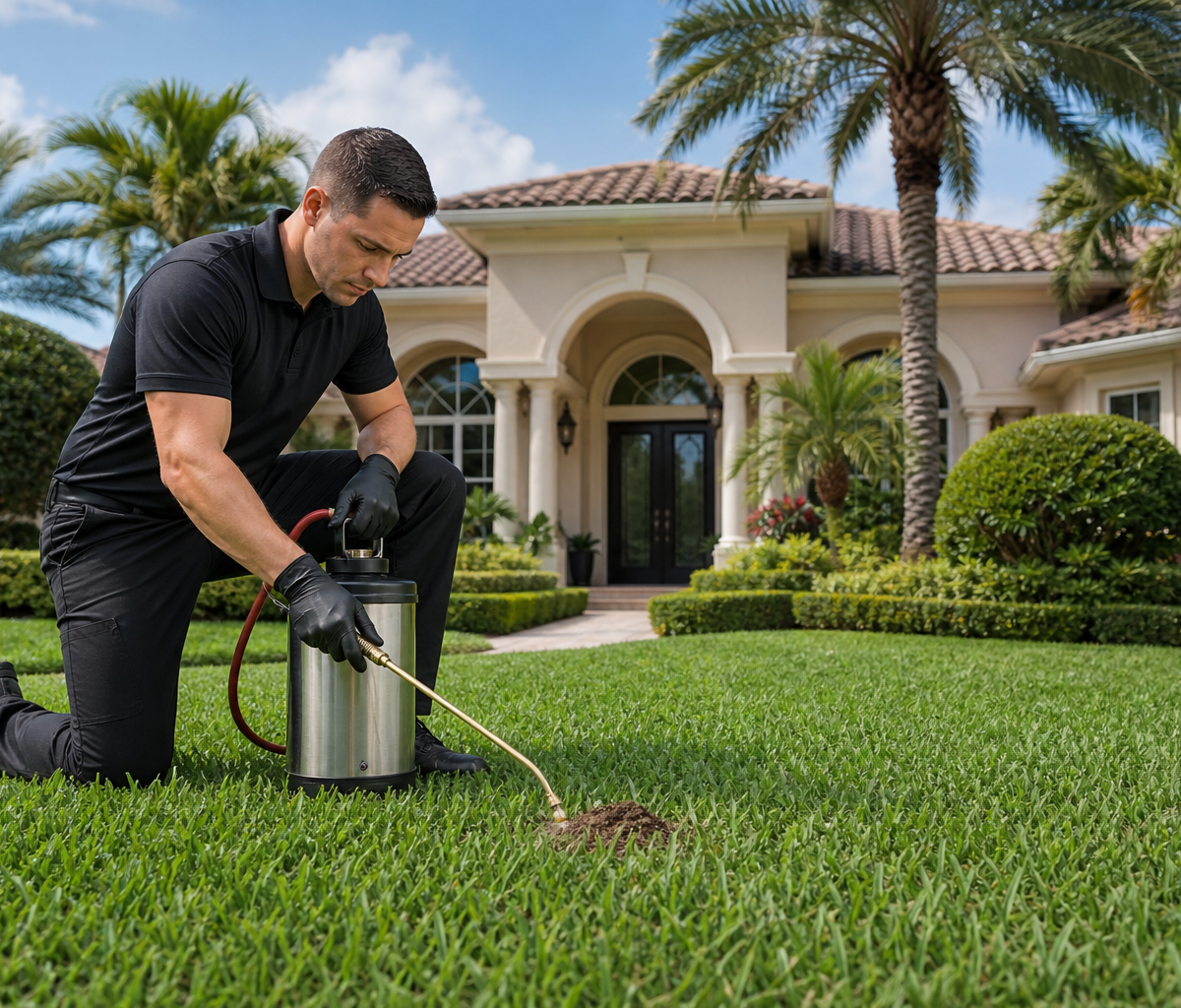
Fleas and ticks are more likely to stay in shaded grass, under plants, beside fences, and in areas animals visit. We focus on those locations instead of covering the entire lawn unnecessarily.
When fleas are active indoors, pet bedding, floors, furniture, and veterinary care may also need attention. Yard service cannot correct an established indoor problem on its own.
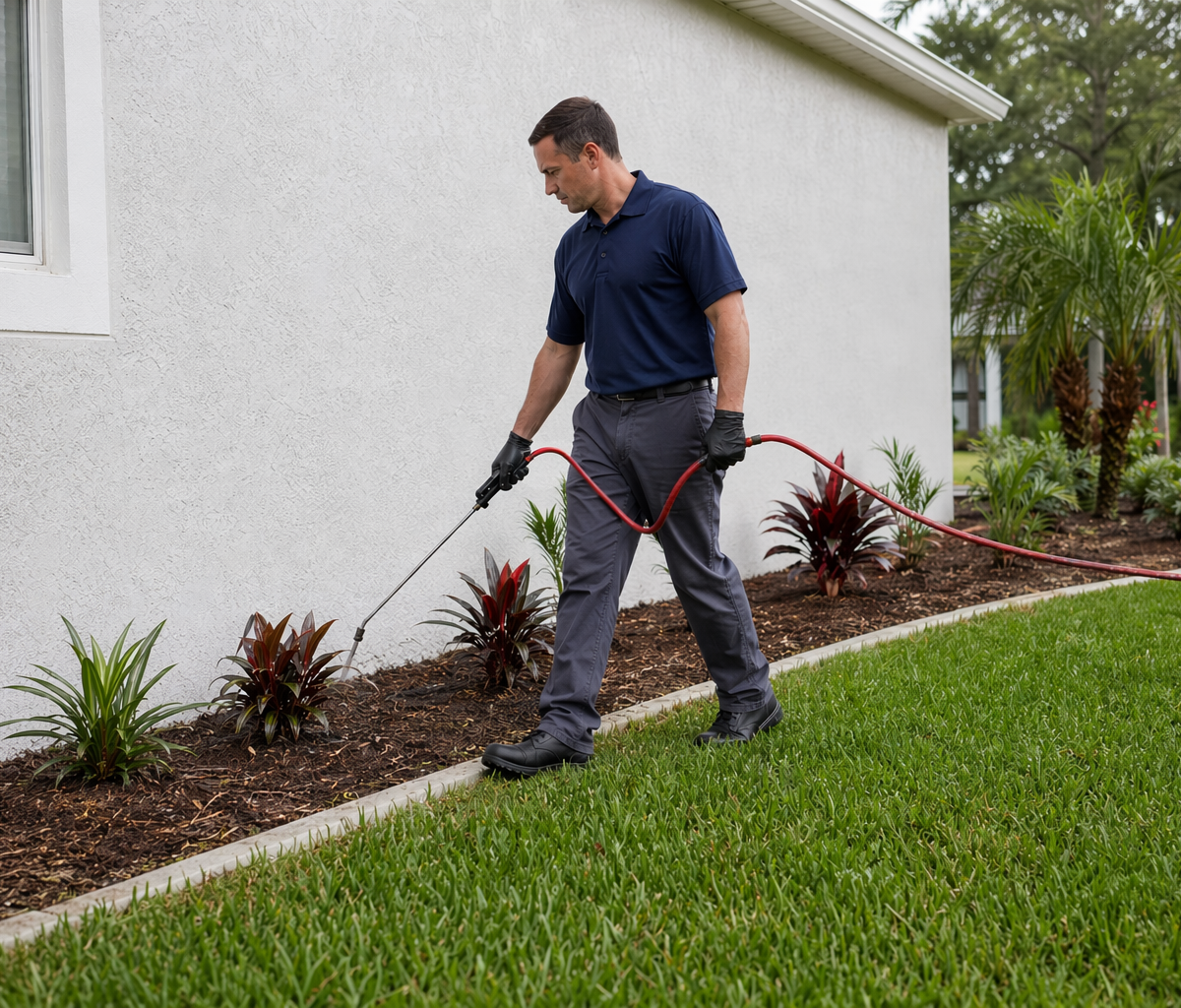
Exterior pest control focuses on the route pests take toward the house. We inspect foundations, doorways, windows, utility lines, vents, and damp areas before deciding where treatment belongs.
Many indoor sightings begin with outdoor activity. However, an established interior problem may require indoor access or a different type of service.
My Organic Turf also provides separate services for rodent control, commercial pest control, and new construction pest control.
Let us know exactly what you have seen. We can determine whether routine pest control fits or whether the concern belongs under a more specialized service.
Pests often take advantage of other issues on the property. Overgrown plants, leaking irrigation, weak turf, and openings around the structure can all contribute.
Thin turf, weeds, and dense landscape growth can provide more cover around the yard. Our lawn and shrub care includes organic fertilization, targeted weed control, plant care, and property assessments.
A declining tree may attract insects or have other health concerns. Our tree and palm care includes organic fertilization, health assessments, targeted trunk care, and monitoring.
A leak or misdirected sprinkler can keep soil, mulch, or the foundation wet. Our sprinkler services include system checks, head cleaning, adjustments, and suitable repairs.
LOCAL CARE WITH A CLEAR PLAN
We start with what you are actually dealing with. The inspection follows pest activity through the landscape, damp areas, the foundation, and possible entry points before recommending any treatment.
Service focuses on the areas tied to the problem. We consider gardens, play equipment, pools, pet areas, and other regularly used spaces before work begins.
You will also know what happens after the visit. We explain re-entry, standing water, landscape changes, and any repairs worth making. If the activity moves or returns, tell us where you see it so the next service can respond to the change
ANSWERS BEFORE SERVICE
Find straightforward answers about Tampa pest control, including mosquitoes, fleas, ticks, household pests, preparation, re-entry, recurring service, and what happens after treatment.
My Organic Turf provides focused control for mosquitoes, fleas, ticks, and common household pests around Tampa properties. We find the areas tied to the activity, treat where it makes sense, and explain what can help between visits.
Tell us what you are seeing, when it appears, and which parts of the property have become uncomfortable to use. We will inspect the issue, recommend the right service, and give you a clear plan to reduce the activity.