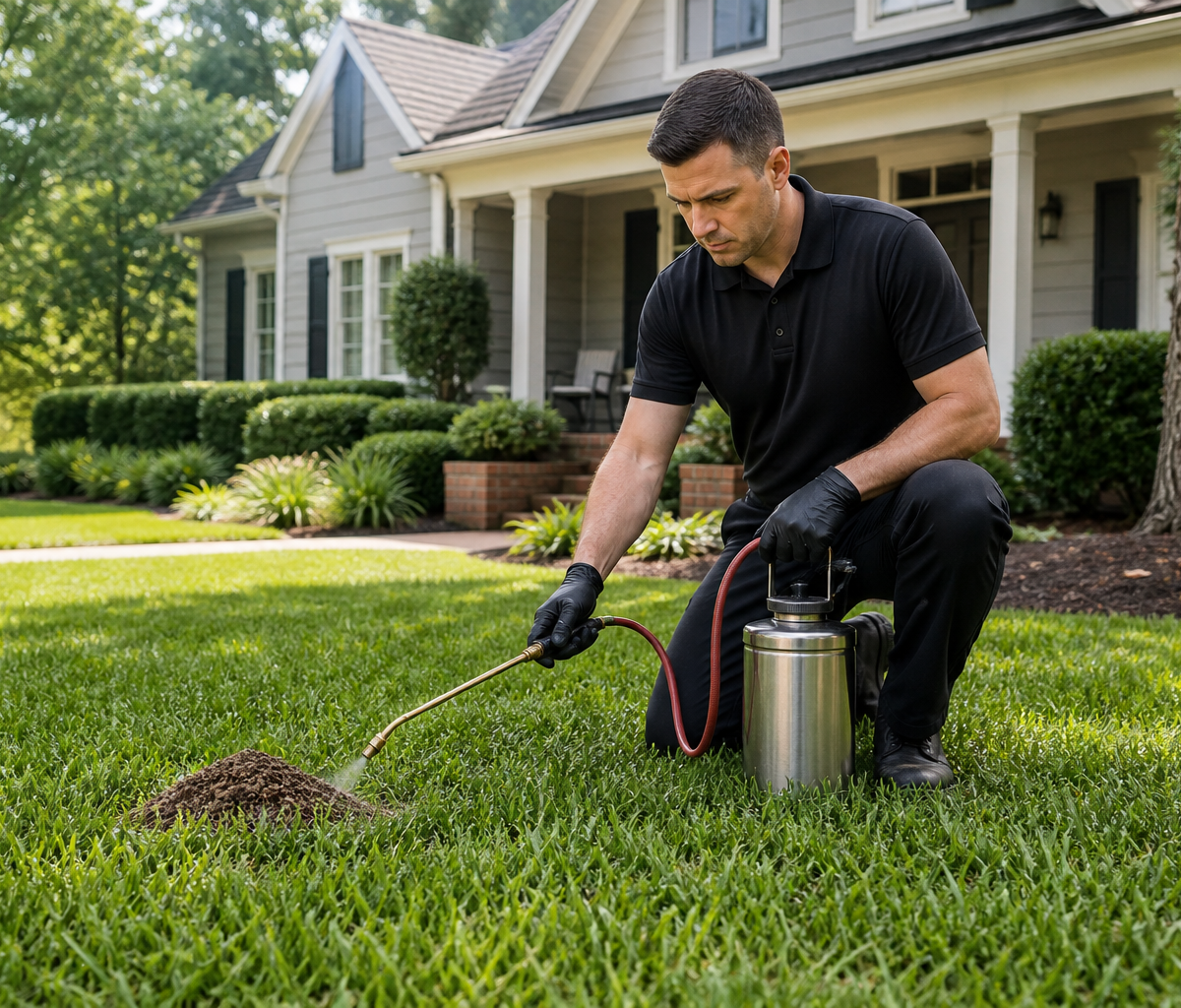
ANT CONTROL THAT GETS TO THE SOURCE
Ants have a habit of turning up where you least want them. Around the kitchen sink. Inside a pantry cabinet. Along the patio door. You clean the area, the trail disappears, and before long, they’re back.
My Organic Turf helps homeowners find out where those ants are coming from and what is keeping them around. Our Service Pros check the trails, look for nesting areas, and choose a treatment that fits the species involved. The aim is to deal with the colony, not spend another week chasing ants across the counter.
FIND WHERE THEY'RE COMING FROM
Ants don’t need much of an invitation. A little food residue, a damp spot beneath the sink, or a gap around a window can be enough. Once a worker finds something useful, others may follow the scent trail.
The colony itself could be in the yard, beneath a patio, or tucked away inside a wall. That’s why wiping away the trail often provides only temporary relief.
Ants tend to follow edges. You’ll often see them moving along baseboards, behind appliances, or around door frames.
We follow that activity to find likely entry points and the places attracting them.
Some ants go after sweets. Others prefer grease or protein. Certain species nest outdoors, while others settle into sheltered spaces inside a building.
Knowing which ants you’re dealing with makes a difference. We check the species before deciding how to treat them.
OUR ANT CONTROL PROCESS
We start where you've been seeing ants. Maybe there's a trail behind the toaster, activity near the back door, or ants gathering around a bathroom sink.
Knowing when they appear and how often helps us narrow things down.
Our Service Pros check baseboards, plumbing openings, exterior walls, and nearby landscaping.
We also look for food, moisture, and sheltered areas that may be drawing the ants in.
Different ants need different approaches. A product that works well for one species may do little for another.
We identify the pest as closely as possible and explain the treatment we recommend.
Treatment may involve bait, targeted applications, or another method suited to the infestation.
We follow the product label and take care around food preparation areas, pets, and spaces your household uses every day.
Ant activity doesn't always stop immediately. With bait treatments, you may see workers collecting material for a while before the numbers begin to fall.
We'll explain what's expected and what should be left alone.
If ants are still active after the expected treatment period, let us know.
We can look for another colony, a missed entry point, or a reason the original treatment isn't reaching the source.
ANT CONTROL SERVICES
A few ants around the sink can turn into a steady trail across the counter. Kitchens, bathrooms, pantries, and laundry rooms are common trouble spots because food and moisture are often close by.
Our Service Pros check where the ants enter and where they’re heading. Treatment is placed where it can address the activity without unnecessary applications around everyday living spaces.
Ant colonies often settle beneath mulch, along pavement, in garden beds, or near the foundation. From there, workers may find their way indoors through surprisingly small gaps.
We inspect the outdoor activity and look for routes connecting the nest to the house. The treatment depends on the ant species and where the colony is located.
Sometimes the ants disappear for a few days, only to turn up in another room. That can happen when the colony remains active or when a second nesting area is involved.
We look at what’s changed, where the new trail begins, and whether the earlier treatment had time to work. Another application isn’t always the first answer.
KNOW WHEN TO GET HELP
One ant on the windowsill isn’t usually cause for alarm. A trail that returns every morning, or ants turning up in several rooms, is a different matter.
Food and moisture make kitchens attractive to many ant species. Even after a thorough cleaning, workers may continue following a route they already know.
We check the trail and nearby openings to see where they’re getting in.
When ants appear in the bathroom one day and the bedroom the next, they may be using several entry points or nesting somewhere inside.
Our Service Pros look for connections between the affected areas instead of treating each sighting separately.
A steady line of ants moving along an exterior wall can be a clue that a nearby colony is finding its way toward the house.
We check the soil, landscaping, and openings around the building before recommending treatment.
A spray may kill the ants you see without reaching the colony. Some species can also become harder to control when their nests are disturbed.
Tell us what you’ve already used. It helps us avoid treatments that may work against each other.
AFTER ANT TREATMENT
A few small changes can make a difference after treatment. The exact instructions depend on what we used and where it was applied.
If we’ve placed ant bait, don’t move it or clean it away unless instructed. Workers need time to collect the material and carry it back to the nest.
A household spray can interfere with bait by killing or repelling the ants before they reach it.
Ask us before adding another product near the treated area.
Crumbs beneath the toaster, sticky spills, and open food containers can keep attracting ants.
Keep those areas clean without disturbing any treatment placements.
Check for leaks beneath sinks, around plumbing, and near appliances. Some ants are drawn to moisture as much as food.
Fixing a small leak may remove one reason they keep returning.
Pet bowls can attract ants, especially when food sits out for long periods.
Store unused food in sealed containers and clean bowls when practical.
If ants begin appearing somewhere else, tell us where you see them.
A new trail may point to another entry route or a separate colony.
Ants can seem to appear overnight. Often, the colony was already nearby, but a change in weather or access to food and water has brought the workers into view.
Heavy rain may disturb outdoor nests or push ants toward sheltered ground. Some find their way into garages, wall openings, and other protected spaces.
We look at what’s happening outside as well as indoors.
When the soil dries out, sinks, bathrooms, and damp areas around the home may become more attractive.
Finding those moisture sources can help reduce activity.
Branches touching the house and dense plants near exterior walls can give ants convenient routes toward windows and rooflines.
We check these connections when inspecting the property.
Just because you don’t see ants for a few days doesn’t mean the nest is gone. Workers may change their routes or become active at different times.
We focus on the source rather than judging the problem by one quiet afternoon.
COMMON ANT CONTROL QUESTIONS
Cleaning up another trail gets old, especially when the ants keep finding a way back. The problem usually needs more than a quick spray.
Tell My Organic Turf where you’ve been seeing ants and what you’ve already tried. Our Service Pros will find the likely source, explain the treatment, and help you get the problem under control.