
FEED THE LAWN, NOT THE PROBLEM
Is your grass losing color, growing unevenly, or staying thin despite regular watering? My Organic Turf provides organic lawn fertilization tailored to your grass, soil, season, and property conditions.
START WITH THE WHOLE LAWN
We begin with the concern your staff, tenants, or customers have noticed. From there, we check surrounding areas, identify likely causes, and decide what needs attention first.
We check the grass type, color, density, visible stress, and overall growth. Thin areas, compacted ground, weeds, bare spots, and signs of poor water coverage all deserve attention.
We also ask about mowing, watering, recent sod installation, and any previous lawn care. Those details help explain why one section may look different from another.
Sunlight, shade, drainage, soil, and irrigation all affect how grass uses nutrients. A shaded lawn may grow more slowly. A low area may remain wet after rain. A clogged sprinkler head may leave one patch dry while another receives too much water.
Fertilization works best when you understand these conditions. If another problem is holding the lawn back, we will point it out before it is mistaken for a lack of nutrients.
The plan reflects the grass, season, property, and current lawn condition. We decide what to apply, where it belongs, and when the lawn is ready for it.
Applications may change during the year because grass does not grow at the same rate in every season. Weather and recent lawn stress may also affect the timing.
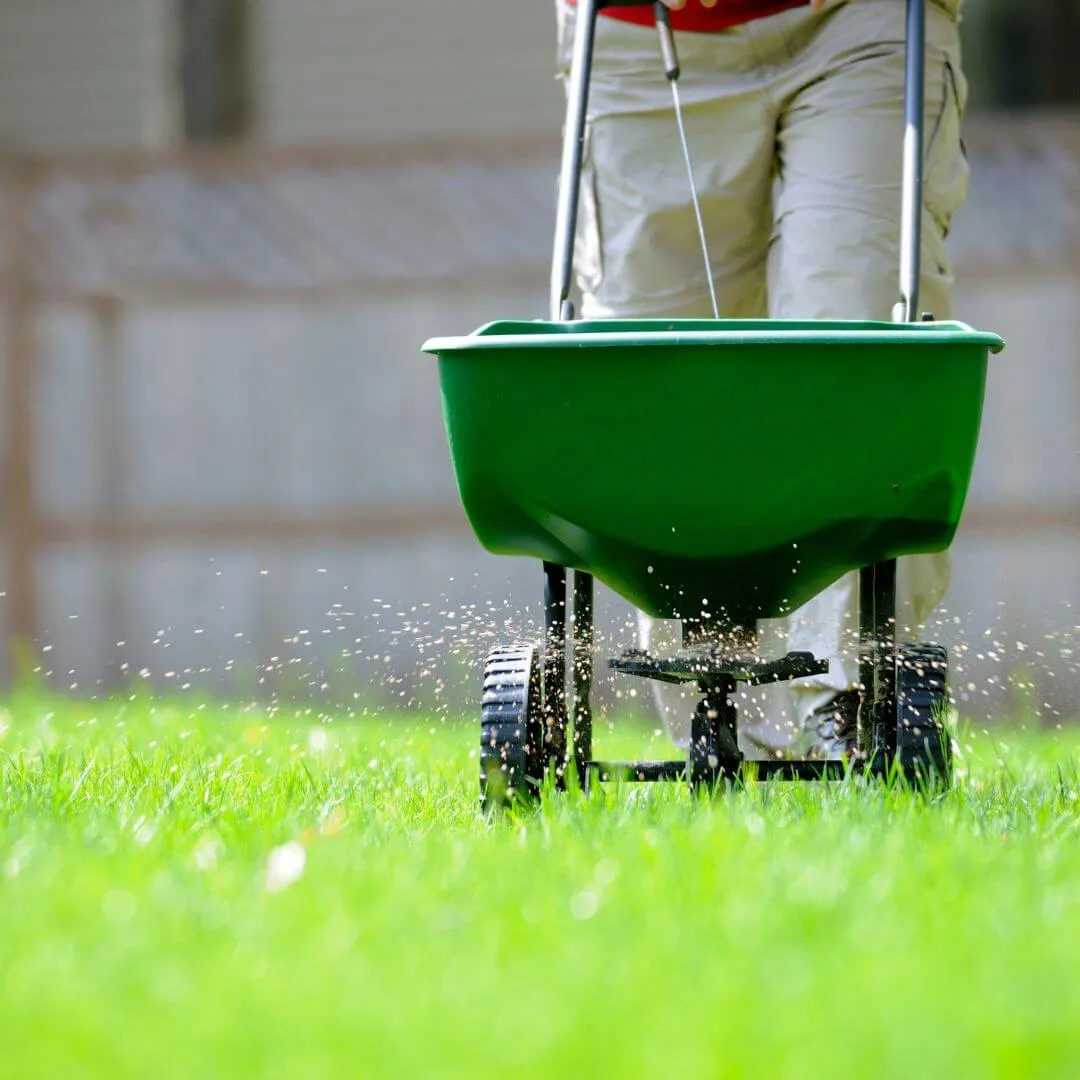
Our team treats the right turf areas, paying attention to edges, pavement, plant beds, and areas where runoff could occur.
We avoid treating unrelated spaces as though the entire yard has the same needs. Uneven growth, shade, and drainage may require closer attention in certain areas.
Lawn care isn't finished after one application. We check how the grass is responding and look for changes in color, growth, weeds, moisture, and overall condition.
If the lawn is not improving as expected, we look for the reason. Watering, mowing, disease, insects, compaction, and shade can all affect the response.
Aftercare depends on the application, recent weather, and your lawn’s condition. We will leave instructions that fit the service completed at your property.
Some applications need watering after service, while others need time to remain on the grass. Wait for your technician’s directions instead of turning on the sprinklers automatically.
Heavy rain can also change the plan. Let us know if the property receives unusual rainfall soon after the visit and you are unsure what to do.
Allow the recommended amount of time before mowing. Cutting the grass too soon may interfere with the application or remove material before it has had time to settle.
Keep the lawn at a suitable height for the grass type rather than cutting it extremely short.
Normal grass clippings can return useful material to the soil when they are short and spread evenly. Break up or remove thick piles because they can block sunlight and hold moisture against the grass.
Check for sprinkler heads that are blocked, tilted, leaking, or missing parts. Uneven watering may become easier to see as the grass begins growing.
Our Tampa Bay irrigation service can address sprinkler coverage, cleaning, adjustments, and repairs.
Contact us if the lawn develops new discoloration, rapid thinning, unusual spots, or another concern after service. A photo and the location of the change can help us review it sooner.
READ THE LAWN BEFORE FEEDING IT
Faded color is one reason homeowners ask about fertilization, but it is not the only one. Grass may also show a change in density, growth, or recovery.
A lawn that has lost its usual color may not be receiving what it needs. The change may cover the entire yard or appear in several scattered areas.
Color alone does not confirm the cause. Irrigation issues, shade, lawn disease, and root damage can create a similar look, so we check surrounding conditions before treating.
Grass that barely grows during its active season may need support. Slow growth becomes more noticeable when nearby areas recover normally after mowing or rain.
The grass type and season matter here. A naturally slow period shouldn’t be treated as a problem.
A thin lawn leaves more open space between grass blades. That makes the soil easier to see and gives weeds more room to establish.
Fertilization may support new growth, but thin grass can also come from shade, compacted soil, poor watering, insects, or repeated scalping during mowing.
Foot traffic, pets, weather, and ordinary use can wear down a lawn. Healthy grass should recover over time during active growth.
A lawn that remains worn may need fertilization along with changes to mowing, watering, or traffic patterns.
One area may grow well while another stays pale or thin. That difference often points to a local issue rather than a fertilizer problem across the entire property.
Shade, irrigation coverage, drainage, soil depth, and tree roots can all explain why grass responds differently within the same yard.
TIMING CHANGES THE RESULT
Fertilize Florida lawns while the grass is actively growing and can use the nutrients. The right timing depends on the grass type, recent weather, lawn condition, and local fertilizer rules.
A fixed calendar does not account for every property. An early warm period may encourage growth, while an unusual cold spell may slow it down. Newly installed sod needs time to establish before you begin regular fertilization. Grass recovering from another problem may also need a different approach.
Heavy rain deserves attention. Applying fertilizer just before a strong storm increases the chance that it will wash away before the lawn can use it. Dry weather raises a different concern if irrigation doesn’t reach the full treatment area.
Tampa Bay communities may have local fertilizer restrictions, particularly during the rainy season. The UF/IFAS guide to fertilizing Florida lawns recommends checking the rules that apply to the property and fertilizing during active growth.
My Organic Turf accounts for seasonal conditions and property needs when planning service. We also check how the lawn responds over time rather than assuming the same timing will suit every yard.
ORGANIC CARE WITH A PURPOSE
My Organic Turf uses 100% organic fertilizer as the foundation of our lawn fertilization service. It supports the grass and the soil without relying on a standard chemical fertilizer program. Chemical fertilizer has a direct impact on the environment as seen during red tide bloom.
Our approach focuses on steady lawn care. We want the grass to develop strong growth above ground and a stronger foundation below. That takes proper nutrition, consistent watering, suitable mowing, and enough time for the lawn to respond.
Organic fertilization is not a shortcut for every lawn problem. It cannot correct broken sprinkler coverage, deep shade, severe compaction, or damage from an active lawn issue. Those conditions need to be addressed alongside the fertilization plan.
The value comes from treating the lawn as a connected system. Grass, roots, soil, water, sunlight, and seasonal growth all affect one another. Feeding the grass without checking the rest can leave the real concern untouched.
Our monthly lawn assessments let us watch those connections. When the lawn changes, we can update the recommendations instead of continuing with a plan that no longer fits.
MORE THAN ONE PART OF LAWN CARE
Fertilizer performs one job within a broader lawn care plan. Several other parts of the property influence how the grass looks and grows.
Water needs to reach the root area evenly. Too little leaves dry, weak grass. Too much keeps the ground wet and may contribute to other lawn problems.
A sprinkler system can appear to be running normally while a blocked or misaligned head misses part of the lawn.
Cutting grass too short removes too much leaf growth and stresses the lawn. Dull blades can tear the grass rather than cutting it cleanly.
The right mowing height varies by grass type. Consistent mowing usually works better than allowing the lawn to grow tall and then removing too much at once.
Open spaces in thin turf give weeds room to grow. Improving the lawn may reduce some of that space, but established weeds often require separate attention.
Our main organic lawn care services include targeted weed control along with fertilization and other lawn care.
Compacted soil can make it harder for water and air to move into the root area. Fertilizer cannot solve that physical restriction on its own.
Lawn aeration may be appropriate when compaction is limiting the lawn.
New sod needs careful watering and time to establish roots. Don’t start regular fertilization too soon.
Review our new sod care guide for preparation, watering, and early maintenance information.
CARE BASED ON YOUR GRASS
We do not treat every lawn as if it has the same grass, soil, sunlight, or watering pattern. The fertilization plan begins with what we see at your property.
Our team checks the lawn before making a recommendation. We pay attention to color, density, grass type, drainage, irrigation, shade, and visible damage. If the problem appears to come from something other than nutrition, we tell you.
My Organic Turf uses 100% organic fertilizer and adjusts applications around the lawn and season. Regular visits allow us to see how the grass is responding, catch new concerns, and update the plan when needed.
You also receive practical guidance about watering and mowing. There is no need to guess what should happen after each visit. We explain the next step based on the work completed and the condition of the property.
LAWN FERTILIZATION QUESTIONS
Fertilization raises questions about timing, watering, pets, new sod, and how quickly the lawn may change. Here are straightforward answers from our team.
Pale color, slow growth, and thin grass do not always have the same cause. My Organic Turf looks at the lawn, watering, sunlight, soil, and season before recommending organic lawn fertilization.
You receive care based on your property, along with clear directions for watering, mowing, and what to watch after service. Future visits give us a chance to see how the lawn responds and make adjustments when conditions change.
Tell us what has changed in your grass, where the concern appears, and how long it has been present. We will assess the property and recommend the next step for your lawn.