
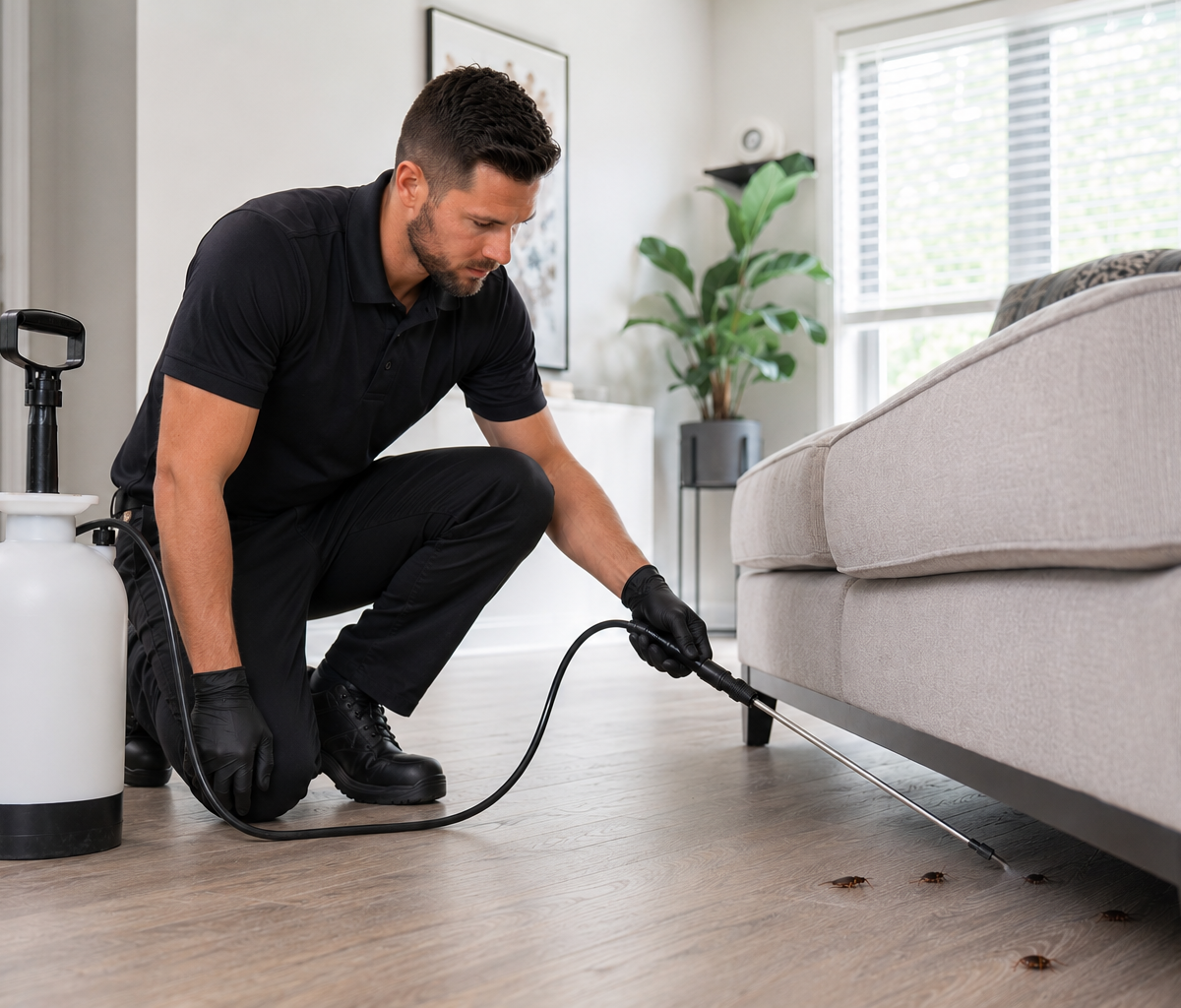
PROFESSIONAL COCKROACH CONTROL

Cockroach Control Services

Cockroaches can settle behind appliances, beneath sinks, inside cabinets, and around plumbing where food, moisture, and shelter are available. Their ability to hide in narrow spaces makes infestations difficult to control with surface cleaning or household sprays alone.

My Organic Turf provides cockroach control for homes dealing with active infestations and recurring roach problems. Our Service Pros identify the species, inspect likely nesting areas, and use treatments suited to the infestation. We also help address the food, water, and shelter sources that allow cockroaches to remain indoors.

Why Do Cockroaches Keep Returning?

Cockroaches can survive in places that are rarely disturbed. Small gaps behind kitchen cabinets, warm spaces around appliances, and damp areas beneath plumbing give them somewhere to hide during the day.

The cockroaches seen moving across a floor may represent only a portion of the infestation. Eggs and immature roaches can remain hidden, and some species reproduce quickly when conditions are favorable.

  • Food and Moisture Keep Roaches Active

    Cockroaches feed on crumbs, grease, food residue, and other organic material. They also need access to water, making leaking pipes and damp cabinets common trouble spots.

    Cleaning helps remove attractants, but an established infestation may still require treatment in the places where roaches are hiding.

  • The Species Makes a Difference

    German cockroaches commonly establish themselves indoors, particularly around kitchens and appliances. American cockroaches are larger and may enter from drains, crawl spaces, or other damp areas.

    Identifying the species helps narrow down the likely source and prevents treatment from being concentrated in the wrong places.

OUR COCKROACH CONTROL PROCESS

What Happens During Cockroach Treatment?

Review the Reported Activity

We begin with the rooms where cockroaches have been found, how often they appear, and whether any treatments have already been used.

Information about leaks, appliance activity, and recent changes around the home can also be useful.

Inspect Likely Hiding Places

Our Service Pros check accessible cabinet spaces, appliance surroundings, plumbing openings, and other areas where cockroaches may be sheltering.

Droppings, egg cases, and live activity help establish where treatment is needed.

Identify the Cockroach Species

Different cockroaches have different nesting habits. Some breed indoors, while others may enter from exterior or damp structural areas.

Species identification helps determine whether the main problem is an indoor colony, an entry issue, or both.

Treat the Infested Areas

Treatment may involve suitable gel baits, bait stations, or targeted crack-and-crevice applications.

Products are used according to their labels, with care around food preparation surfaces, household belongings, and areas used by children or pets.

Explain the Aftercare

Some treatments work gradually, and cockroach activity may continue while the population declines.

We explain what to clean, which placements must remain undisturbed, and when follow-up may be necessary.

Reassess Remaining Activity

If cockroaches continue appearing beyond the expected treatment period, the infestation may need further attention.

Follow-up inspections can help locate remaining hiding places, assess treatment progress, and determine whether another application is required.

COCKROACH CONTROL SERVICES

How We Handle Cockroach Infestations

Kitchen and Indoor Cockroach Control

Kitchens provide warmth, moisture, and easy access to food. Cockroaches may hide behind refrigerators, beneath dishwashers, inside cabinet joints, or near plumbing connections.

Our Service Pros inspect these areas for live roaches, droppings, egg cases, and other signs of infestation. Treatment may include carefully placed baits or applications in suitable cracks and crevices, depending on the species and conditions.

Bathroom and Moisture-Area Cockroach Control

Bathrooms, laundry rooms, and utility spaces can attract cockroaches when moisture is available. Leaking fixtures, damp wall openings, and poorly sealed plumbing penetrations may allow activity to continue.

We check accessible moisture-prone areas and determine whether the roaches are nesting nearby or entering from another part of the building.

Recurring Cockroach Infestation Control

Cockroaches may remain active after a surface spray because the product never reached their hiding places. Egg cases and young roaches can also contribute to activity after the initial treatment.

We review the infestation, previous applications, and any remaining food or water sources. Some infestations require follow-up visits rather than a single application.

palmetto bug season in florida

When Should Cockroach Activity Be Checked?

Cockroaches are often more active at night, so an infestation can develop before the full extent becomes noticeable. Droppings, egg cases, shed skins, and repeated sightings are useful signs that the problem needs attention.

  • Cockroaches Around Kitchen Appliances

    Warm motors, narrow gaps, and nearby food sources make appliances attractive hiding places.

    Activity around refrigerators, stoves, and dishwashers deserves inspection, especially when roaches are appearing repeatedly.

  • Roaches Beneath Sinks and Cabinets

    Plumbing openings and damp cabinet spaces can provide both shelter and moisture.

    These areas should be checked for leaks, droppings, and gaps that allow cockroaches to move between rooms.

  • Cockroaches Seen During the Day

    Some cockroaches occasionally appear during daylight hours, but frequent daytime sightings may indicate a substantial infestation or disturbed hiding places.

    An inspection can help establish the species and how widely the activity has spread.

  • Droppings or Egg Cases Indoors

    Small dark droppings, shed skins, and egg cases may be found inside cabinets, behind appliances, or along sheltered edges.

    These signs can remain after roaches have moved elsewhere, so the area needs to be checked for current activity before treatment.

AFTER COCKROACH TREATMENT

What Should You Do After Treatment?

Cockroach control depends partly on keeping food, water, and hiding places to a minimum. Follow the instructions provided after service, especially where baits or other products have been placed.

Leave Bait Placements Alone

Do not remove or wipe away cockroach bait unless instructed. Roaches need access to the bait for it to work.

Avoid applying household sprays over bait placements, as this may interfere with feeding.

Clean Food Preparation Areas

Remove crumbs, grease, and food residue from counters, stovetops, and accessible spaces around appliances.

Follow the treatment instructions before cleaning any surface where a product was applied.

Fix Leaks and Damp Cabinets

Repair dripping pipes, loose plumbing connections, and other sources of unwanted moisture.

Drying damp areas can remove an important resource for cockroaches.

Keep Food and Waste Sealed

Store dry foods in closed containers and empty household waste regularly.

Pet food, grease residue, and uncovered scraps can continue feeding roaches even after treatment.

Reduce Clutter Around Cabinets

Unused cardboard, paper bags, and crowded storage spaces provide additional shelter.

Removing unnecessary materials makes inspection and cleaning easier, particularly around kitchens and utility areas.

Report Continued Cockroach Sightings

Keep track of where roaches are appearing after treatment.

If sightings continue beyond the expected period or increase, contact our team before applying another product.

CONDITIONS THAT SUPPORT COCKROACHES

What Makes a Home More Susceptible to Cockroaches?

Cockroaches can enter clean homes as well as poorly maintained ones. Their presence is not always a reflection of housekeeping. Access points, moisture, food storage, and hidden nesting spaces all influence whether they become established.

For additional information about cockroach prevention and responsible pest management, see the U.S. Environmental Protection Agency’s cockroach control guidance.


Moisture Around Plumbing

Leaks beneath sinks, condensation, and damp utility spaces can provide water for cockroaches.

Repairing these problems helps remove conditions that support continued activity.

Warm Spaces Behind Appliances

Refrigerators, dishwashers, and other appliances may provide warmth and narrow spaces where roaches can remain hidden.

Cleaning accessible areas around appliances can reduce food residue, although established nesting sites may still require treatment.

Gaps Around Pipes and Walls

Openings around plumbing, damaged seals, and cracks may allow cockroaches to move between rooms or enter from other parts of a building.

Sealing suitable gaps can help limit movement after active infestations have been addressed.

Stored Cardboard and Household Clutter

Cardboard boxes and crowded cabinets offer sheltered spaces that are difficult to inspect.

Reducing unnecessary storage makes it easier to identify new activity and maintain treated areas.

COMMON COCKROACH CONTROL QUESTIONS

Cockroach Control FAQs

Get Professional Cockroach Control

Cockroach infestations are difficult to resolve when nesting areas remain hidden behind appliances, inside cabinets, or around plumbing. Treating those spaces and removing the conditions that support roaches is more useful than relying on repeated surface sprays.

My Organic Turf provides cockroach control based on the species and infestation found during inspection. Contact our team to discuss the affected areas, arrange a service visit, and learn what treatment may be needed.