

TARGETED CARE FOR DAMAGING LAWN INSECTS
Are brown patches spreading through your lawn, or is the grass thinning despite regular watering? Grubs, chinch bugs, and sod webworms can damage Florida turf in different ways. My Organic Turf provides lawn pest control services focused on identifying active insects and treating the areas they affect.
A CLEAR LAWN PEST CONTROL PLAN
We begin by asking what you have noticed and when the damage started. Recent watering changes, mowing, fertilization, or new sod installation may help explain what is happening.
We also check the grass type and the location of affected areas.
We examine the grass, thatch, and soil according to the suspected pest. Grubs require a root-zone inspection, while chinch bugs and sod webworms are found closer to the grass blades and surface.
We look for active insects and feeding damage rather than relying on discoloration alone.
Once we identify the problem, we explain what pest problems we see, the type of treatment we are recommending and why.
The recommendation depends on the insect, its development stage, the size of the affected area, and the condition of the grass. If insects are not responsible, we discuss the other conditions that need attention.
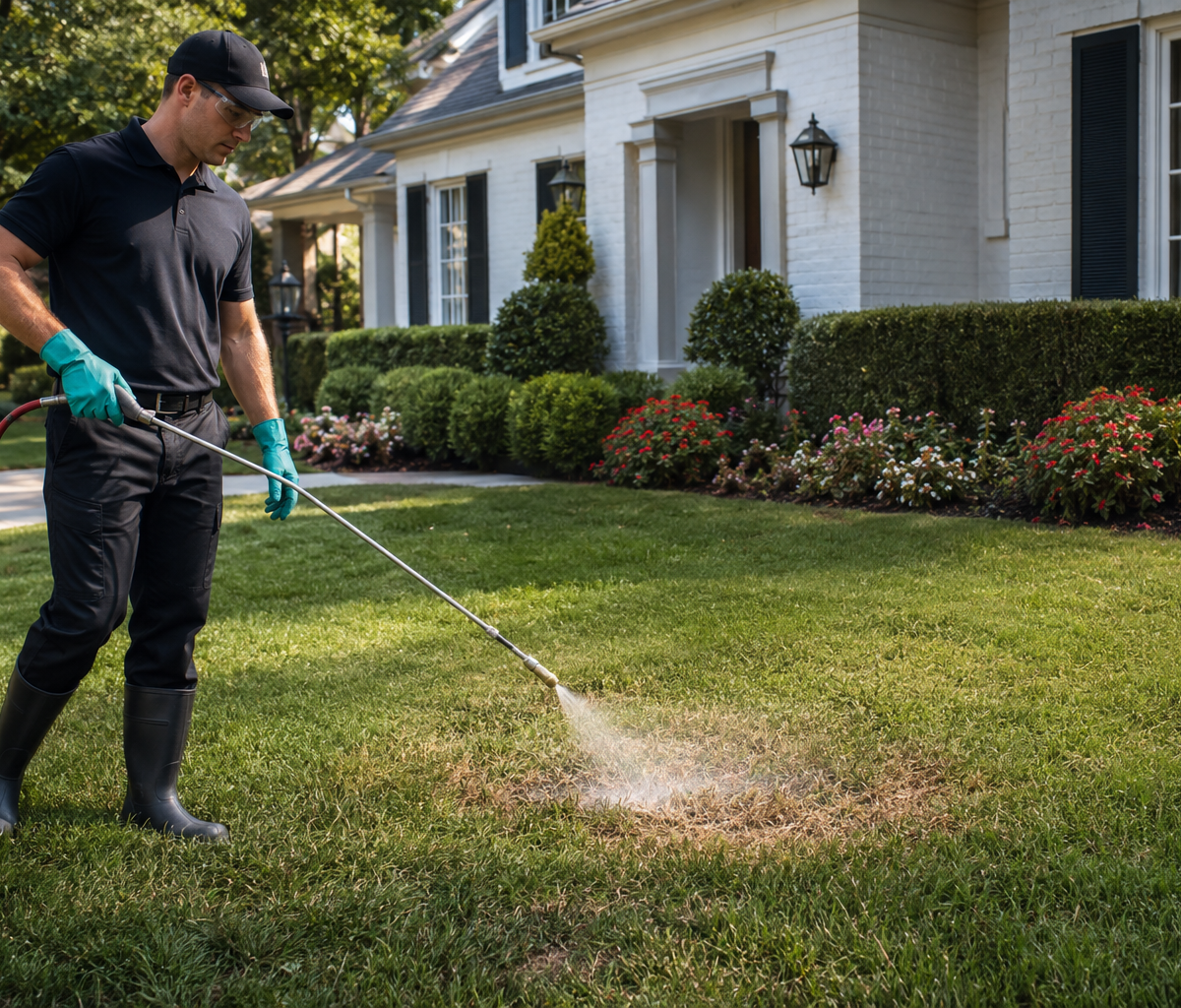
Our service pros apply the selected treatment according to the pest and its feeding location.
We follow the product label and applicable application requirements. The entire lawn is not automatically treated when the problem is limited to specific areas.
After treatment, we explain any watering, mowing, or re-entry instructions that apply.
We also discuss what improvement may look like. Insect activity may decline before the grass shows visible recovery, and dead turf will not turn green again.
We check how the lawn responds and whether new damage appears.
If additional treatment is warranted, we explain why. We may also recommend changes to irrigation or routine lawn care when those conditions are affecting turf recovery.
LAWN PEST CONTROL SERVICES
Grubs feed on grass roots, leaving behind yellow patches, weak turf, and areas that pull away easily from the soil. The damage often becomes more noticeable when the lawn struggles to absorb enough water.
Our Service Pros check beneath the affected grass for active grubs and root damage. We recommend targeted treatment when needed and explain what the lawn may require to recover.
Chinch bugs can cause yellow and brown patches in St. Augustinegrass, particularly during Florida’s warmer months. Their damage often looks like drought stress, even when the lawn receives regular watering.
We inspect the edges of damaged areas for active chinch bugs and treat affected turf when necessary. Our Service Pros also check for watering problems and other conditions that may be stressing the grass.
Sod webworms feed on grass blades, leaving small chewing marks and thin, uneven patches. They are especially active during warm weather and can damage St. Augustinegrass, bermudagrass, and zoysiagrass.
Our Service Pros look for active caterpillars and feeding damage before recommending treatment. We focus on controlling the insects and helping the remaining grass recover.
KNOW WHAT TO WATCH FOR
A few insects in the grass are normal. Many are harmless, and some help control other pests. The concern is whether a damaging population is present and actively affecting the turf.
Contact My Organic Turf if you notice:
Photos can help us understand how quickly the damage is changing. Take pictures of the affected area and nearby healthy grass, particularly if the patches are spreading.
Avoid applying several insecticides while trying to identify the problem. Unnecessary treatments may affect beneficial insects without addressing the actual cause.

AFTER LAWN PEST CONTROL
Aftercare depends on the insect, product, and condition of the grass. Follow the instructions our service pros provide for your property.
Some grub treatments require irrigation to move the product into the soil. Other applications have different watering requirements.
Do not water immediately unless instructed. Follow the guidance for the specific treatment rather than your usual irrigation schedule.
Avoid unnecessary activity on treated grass until the applicable re-entry period has passed.
Keep children and pets away when directed, and do not wash, rake, or disturb treated areas unless our service pros advise otherwise.
Avoid cutting damaged grass too short. Scalping removes leaf tissue the lawn needs for growth and can place additional stress on weakened turf.
Continue mowing at a suitable height for your grass type, and avoid removing excessive growth at one time.
Uneven watering can make insect damage worse or produce symptoms that look similar.
Check for dry spots, overspray, standing water, and areas that receive too much or too little irrigation. Let us know if a section of the lawn remains unusually wet or dry.
Existing brown patches may remain visible after treatment. Look for new yellowing, fresh chewing marks, or damage spreading beyond the original area.
If you notice changes, tell us where they are occurring. That helps us determine whether insects remain active or another issue is affecting the grass.
Grass with living roots and healthy growing points may recover as new growth develops.
Severely damaged sections may need repair or replacement. We can discuss whether additional lawn and shrub care is appropriate once the insect problem has been addressed.
Florida’s warm temperatures, seasonal rainfall, and changing soil moisture can influence lawn insect activity. Each pest responds differently to these conditions.
For additional identification guidance, visit the University of Florida IFAS Extension’s lawn insect pest resource.
Chinch bugs are particularly active during warm weather, especially in St. Augustinegrass. Damage often develops in sunny areas where the grass is already experiencing heat or moisture stress.
Tropical sod webworms thrive during Florida’s warmer months. Their caterpillars feed on grass blades, causing thinning and brown patches when populations increase.
Grubs feed below the soil surface, damaging the roots that help grass absorb water. Their activity may become more noticeable when hot or dry conditions place additional stress on the lawn.
Heavy rain, poor draservice prosinage, and uneven irrigation can produce symptoms similar to insect damage. Our Service Pros check these conditions before recommending treatment so we can address the actual problem.
LAWN PEST CONTROL SERVICE AREA
My Organic Turf provides lawn pest control throughout its current service area.
Availability depends on your property address, grass type, and the pest involved. Contact our team to confirm whether your lawn is within our service area and which treatment options are available.
COMMON LAWN PEST CONTROL QUESTIONS
Find clear answers about grubs, chinch bugs, sod webworms, treatment timing, and what lawn pest control can reasonably accomplish.
Grubs, chinch bugs, and sod webworms do not damage grass in the same way. Identifying the insect helps us choose the appropriate treatment and avoid applications that may not solve the problem.
Tell us where the lawn is changing and what you have noticed. Our Service Pros will inspect the affected areas, explain what is causing the damage, and recommend targeted treatment when necessary.
You will understand what the service is intended to address, how to care for the grass afterward, and what to watch for as the lawn recovers.