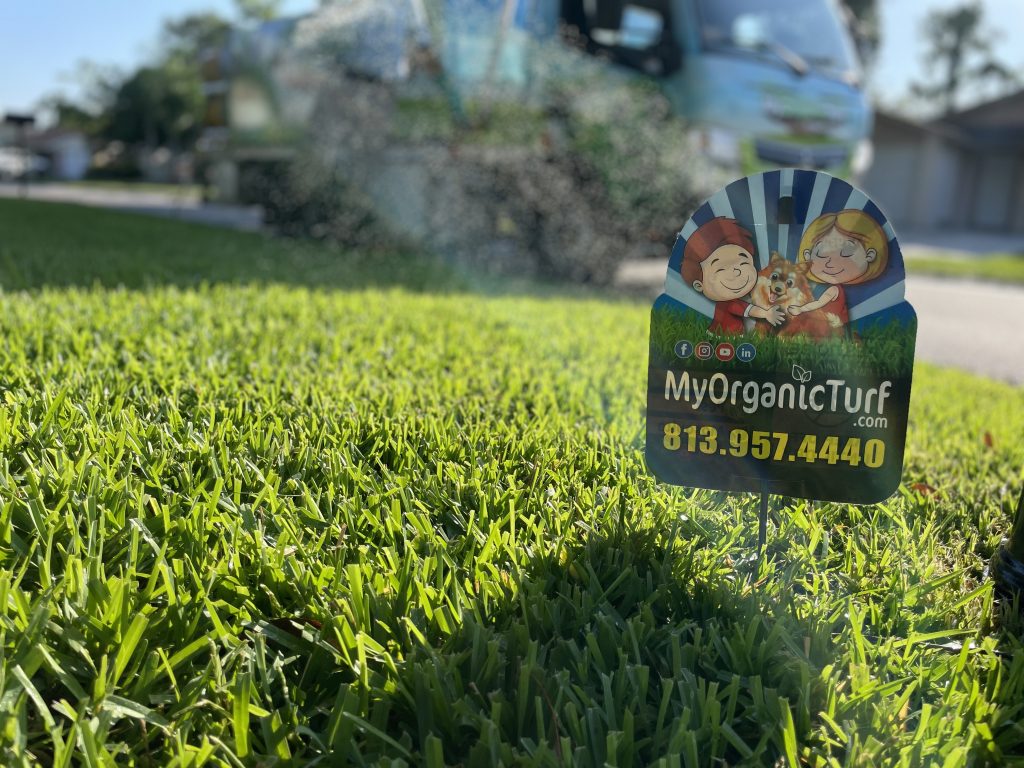


Welcome to spring!
Now that it's not a freezing 60 degrees outside, it's time to bring your lawn back to life.
The secret to achieving that lush, vibrant grass carpet is choosing the right lawn fertilizer for spring.
Lawn Fertilizer for Spring: Unveiling the Key Ingredients for Lush Lawns
Selecting the ideal spring fertilizer is like crafting a potion for your lawn.
The best choice depends on various factors, and understanding your lawn's needs is the key to unlocking its potential.
If you have:
Yellowing Grass:
Choose a high-nitrogen fertilizer.
Results may be visible in as little as 1-2 weeks, with the grass regaining its vibrant green color.
RELATED: 4 Common Causes of Yellow Patches on Your Tampa Lawn
Sparse Growth or Bare Patches:
Thin or bare areas suggest nutrient imbalance. Opt for a balanced fertilizer with added phosphorus and potassium.
Improvement should be noticeable within 3-4 weeks as the grass thickens and fills in.
Weed Invasion:
Weeds taking over indicate poor grass density. Apply a pre-emergent weed and feed fertilizer.
Results vary, but visible weed reduction can occur within 4-6 weeks.
Compacted Soil:
Compacted soil leads to poor water and nutrient absorption. Aerate the lawn and use a compost-based fertilizer.
Enhanced soil structure may take a few months, with improved water penetration noticeable after the first rainfall or watering.
RELATED: Is Your Lawn Starving for Oxygen? Get a Lawn Aeration Service
Thinning Turf:
Sparse grass suggests weakened turf. Choose organic fertilizers like fish emulsion or bone meal.
Thickening and strengthening of the turf may take 4-6 weeks, with visible improvement in density.
Fungal Issues (Brown Patches):
Brown patches signal fungal problems. Apply a balanced fertilizer with fungicide treatment.
Improvement in fungal issues may be visible within 2-4 weeks, depending on the severity.
RELATED: 5 Tricky Lawn Diseases in Florida
When to Use Fertilizer in the Spring
Once temperatures consistently hover around 50 to 60 degrees Fahrenheit, it's showtime.
This temperature range signals grass awakening from winter dormancy and the optimal conditions for nutrient absorption.
Here's your year-round fertilization guide!
How to Know What Fertilizer to Use on Lawn
The best way to know which type of fertilizer to use this spring is to perform a soil test.
Here's how you can do that:
- Get a soil testing kit: Purchase one from a local garden center or even Amazon.
- Collect soil samples: Dig 3-4 inches deep in various areas of your yard, ensuring a diverse representation.
- Analyze the results: Some test kits connect you with an app that will immediately give you results!
- Decode the results: Once received, review the report. Identify nutrient levels – higher nitrogen suggests a nitrogen-rich fertilizer, while elevated phosphorus may lean towards a balanced blend.
- Select your fertilizer: Tailor your choice based on the identified nutrient needs!
Remember, the best lawn fertilizer is tailored to your grass type, soil conditions, and seasonal requirements!