
Maybe you have a stray cat that roams around in your backyard.
You don’t mind— he’s cute (he’s just not stepping a paw inside your house).
But now your pets have fleas.
Treating a yard for fleas isn’t as simple as running the stray cat out of your backyard (sorry, little guy).
These tiny pests can carry diseases like Lyme disease and tapeworms and even cause flea allergy dermatitis, making your pup sick.
The good news is that you don’t have to put your pup at risk for harmful chemicals to get rid of fleas in your backyard.
We’ve got dog-safe solutions to restore your lawn to being a peaceful place for you and your dog.
3 Signs of Fleas in Your Yard
It’s easy to assume fleas are only a problem for your dog, but they can be hiding in your yard, too.
Treating a yard for fleas starts with spotting the signs of an infestation before it becomes a major issue. Here’s what to look out for:
- Flea Dirt: These little black specks are flea droppings, and if you see them on your grass, it’s time to act. Sprinkle some water on them; if they turn red or brown, you’ve got fleas.
- Scratching and Biting: If your dog’s scratching or biting more than usual, fleas might be to blame. Fleas love hiding in shady areas (under your bushes, trees, or patio furniture), so check those spots closely.
- Flea Bites on Humans: Don’t be surprised if you wake up with mysterious bites. Fleas will bite anyone, not just your pets. Here’s what they look like.
You don’t want to leave your yard untreated. Fleas can reproduce in the thousands—seriously, thousands!—and before you know it, your dog, your family, and your yard will be completely overrun.
How Often Should You Treat Your Yard for Fleas?
You want to treat your yard for fleas at least once per month. Once fleas set up camp in your yard, they’re tough to get rid of.
So, here’s the deal:
- Start Early: If you’re starting to notice fleas, treating your yard immediately is crucial. Fleas breed fast, so the sooner you act, the better.
- Treat Every 3-4 Weeks: After the initial treatment, follow up every 3-4 weeks during flea season, which can last from spring through fall in Florida.
- Keep an Eye on the Weather: Heavy rains or high humidity can wash away treatments, so you may need to reapply sooner if weather conditions are bad.
Treating Your Yard for Fleas: 5 Natural Pet-Friendly Solutions
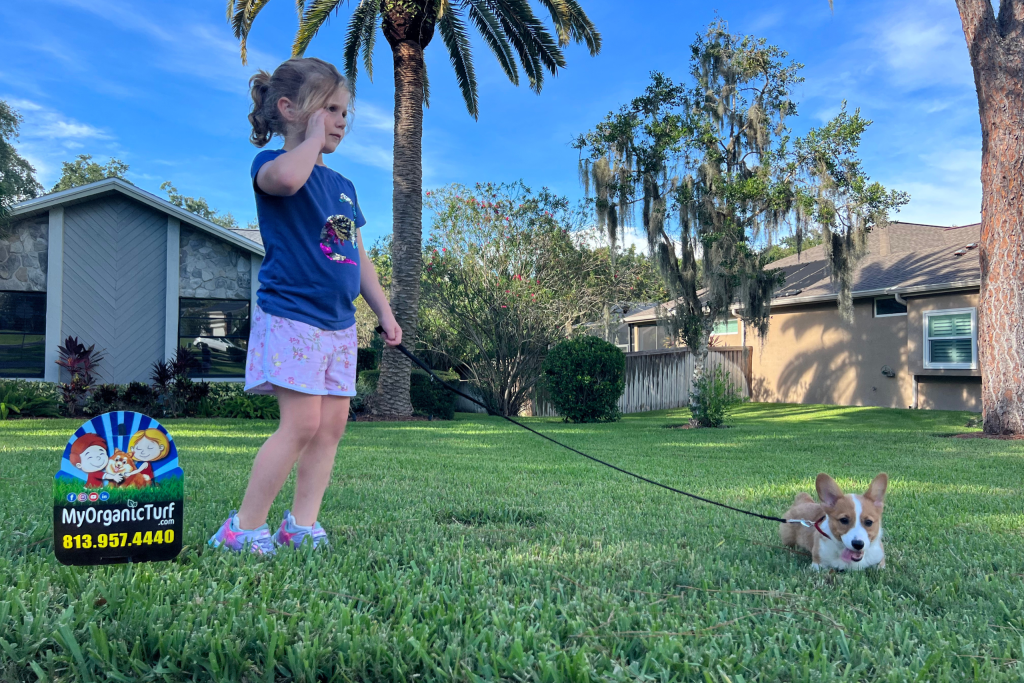
Treating your yard for fleas without chemicals doesn’t mean compromising on effectiveness.
Here are 5 organic flea treatments we’ve used on our own yards (before we started making our own):
1. Diatomaceous Earth (DE)
Diatomaceous earth is a fine powder made from fossilized algae, and it’s one of the best dog-safe flea control solutions around. It’s completely non-toxic to humans and pets but deadly to fleas.
When fleas come in contact with DE, it dehydrates them, eventually killing them.
Simply sprinkle DE around your lawn, focusing on shady spots where fleas love to hide. Reapply after rain or heavy watering.
You can pick up DE at your local garden center or on Amazon. Just make sure it’s food-grade.
2. Nematodes
These microscopic worms are a flea’s worst nightmare.
Nematodes are natural predators of fleas, and they thrive in warm, moist conditions.
When you release nematodes into your yard, they burrow into the soil and attack flea larvae, killing them before they mature into biting adults.
You can buy nematodes at garden stores or online. Simply follow the instructions for applying them to your yard.
3. Cedarwood Oil Spray
Cedarwood oil is a natural flea repellent that’s safe for pets.
Mix a few drops of cedarwood essential oil with water in a spray bottle and lightly mist your grass and shrubbery.
Cedarwood repels fleas and gives your yard a pleasant aroma so your dog (and you) can enjoy the outdoors without worrying about pests.
For the best results, apply this solution weekly and after rain.
4. Flea Traps
While flea traps aren’t a solution for treating a yard for fleas, they can help you monitor flea populations in your yard.
Flea traps use light and heat to attract fleas, where they get stuck in sticky pads. These traps make it easy to spot flea activity and see how well your other treatments work.
Position them near shaded areas or where your dog spends most of their time.
5. Professional Pest Control Services
If the infestation is getting out of hand or you don’t have time to do it yourself, it might be time to call in the pros.
At My Organic Turf, we offer dog-safe, organic flea control services that’ll protect your yard year-round.
Our team uses natural products to treat your lawn, so your pets, family, and the environment are all safe while we get rid of those pesky fleas.
Why Choose Organic Solutions?

You might be wondering: Why go organic when I could just grab a chemical spray off the shelf?
Here’s the deal: chemicals can harm your pets, contaminate your water supply, and hurt your plants.
Organic solutions, on the other hand, are safer for everyone involved. Plus, many of the products we recommend are highly effective at treating and preventing fleas—without the toxic side effects.