
If you’ve ever flicked on the lights and caught a quick scurry out of the corner of your eye—only to see a tiny, creepy-crawly dart under the fridge—there’s a good chance you’ve seen a cockroach nymph— aka a baby cockroach.
And I hate to break it to you, but that’s not a good sign.
When it comes to cockroach identification, nymphs are often the overlooked warning sign that a full-blown infestation is in progress. While adult cockroaches are terrifying in their own right (seriously, who gave them the right to fly?), their younger counterparts are sneakier, faster, and even harder to spot.
And where there’s one nymph, there are usually dozens—if not hundreds—more hiding nearby.
So let’s get into what these little monsters actually look like, what their presence really means for your home, and why ignoring them could cost you way more than just your sanity.
What Does a Cockroach Nymph Look Like?
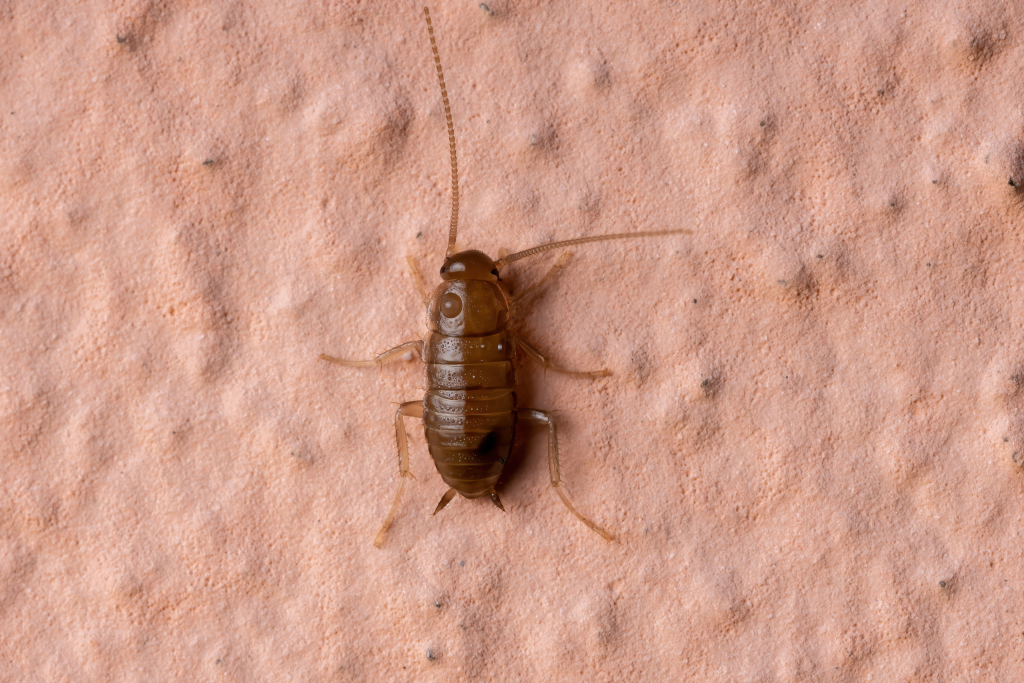
A cockroach nymph is smaller than an adult (usually 1/8 to 1/4 inch) and doesn’t have wings.
Right after they hatch, they’re pale white, almost translucent, which makes them even more terrifying if you catch them under a bathroom light.
After their first molt, they turn darker brown or reddish and continue to grow, shedding their exoskeleton several times along the way. Each molt brings them closer to full-grown horror movie status.
They love the dark and damp—behind appliances, under sinks, inside wall voids. So if you’ve seen one, odds are there’s a family reunion happening somewhere in your home.
In short? You can identify a nymph if it looks like this:
-
Smaller than adult cockroaches (usually 1/8 to 1/4 inch long)
-
Pale or white right after hatching, then darkens to brown or reddish-brown after molting
-
No wings (unlike adults, most nymphs are wingless)
-
Extremely fast and good at hiding in tight, dark spaces
-
Molts multiple times, shedding its exoskeleton as it grows
-
Most active at night and prefers warm, moist areas like kitchens and bathrooms
What to Do If You See a Cockroach Nymph?
Here’s the thing: cockroach nymphs don’t just wander around for fun. If you’re seeing them out in the open, it means there’s a lot more going on behind the scenes—most likely a mature colony.
Here’s your plan of attack:
1. Don’t Panic—But Don’t Ignore It Either
Seeing a nymph is a giant neon sign that there’s a breeding population nearby. They typically don’t travel far from their nest, which means the nest is in your house. Cool, right?
2. Clean Everything
Cockroaches thrive on crumbs, grease, and even glue from cardboard boxes. Wipe down counters, vacuum floors, and make sure pet food isn’t left out overnight.
3. Eliminate Water Sources
Leaky faucet? Damp cabinets? These are like five-star resorts for cockroaches. Dry them out.
4. Call in Backup
DIY sprays won’t cut it for cockroach nymphs. You’re dealing with the future of an infestation, so it’s time to bring in professionals (👋 hi, that’s where we come in—more on that later).
Pro Tip: Don’t try to squish them with your shoe. They’re fast, and honestly? You’ll lose.
Do Baby Cockroaches Mean Infestation?
Short answer? YES.
Long answer? Also yes, but let’s break it down.
When you see cockroach nymphs, it means eggs have already hatched. Female cockroaches can lay up to 50 eggs in one go—and they don’t just do it once. The average female German cockroach lays about 4–8 oothecae (egg cases) in her lifetime. That’s up to 400 roaches from one adult.
So yeah—if you’re seeing baby cockroaches, there’s an active infestation happening, and you’re just seeing the tip of the antenna.
Worse? Nymphs stay close to their birth site, which means they hatched somewhere nearby. You don’t just have cockroaches—you’ve got a breeding ground.
Don’t assume a couple of bug bombs will take care of it, either. Cockroaches (and their nymphs) have developed resistance to many over-the-counter pesticides, and if they survive a treatment, they’ll adapt and reproduce even faster.
The Real Horror Story: Health Risks + Home Value
Here’s where it gets scary.
Cockroaches don’t just look gross—they’re walking (and crawling) disease factories. They pick up bacteria like E. coli and Salmonella on their legs and spread it across your home—countertops, utensils, kids’ toys, you name it.
Even worse? Their feces, saliva, and shed skin can trigger serious allergic reactions and asthma attacks, especially in kids and the elderly.
If that’s not enough to convince you to act fast, consider this:
A visible cockroach problem can devalue your home significantly. According to real estate experts, pest infestations (especially cockroaches or termites) can drop your property value and scare off buyers completely.
No one wants to imagine sleeping in a room that might have cockroaches nesting in the walls.
How My Organic Turf Can Help (Aka: Let’s Squash This Nightmare)
If you’re here in the Tampa Bay area and wondering what the heck to do next—hi, I’ve got you.
At My Organic Turf, we specialize in environmentally friendly pest control solutions that are safe for kids, pets, and yes, even nosy neighbors who like to ask what the “bug van” is doing in your driveway.
We start with a thorough inspection to figure out where the cockroach nymphs (and their not-so-cute parents) are hiding. Then we put together a treatment plan that targets every single stage of the cockroach life cycle.
Because if you only kill the adults? You’re just giving the nymphs a chance to grow up and keep the nightmare going.
We’re not about quick fixes—we’re here to help you get your home (and your peace of mind) back, without dousing your entire kitchen in harsh chemicals.
Sound like a plan? Here’s more about our Tampa Bay Pest Control services. Or feel free to just shoot us a message. We’re friendly, fast, and very, very good at making cockroaches regret ever stepping foot in your home.
TL;DR Recap (Just in Case You’re Speed Reading with a Shoe in Hand):
-
Cockroach nymphs = baby roaches that mean BIG problems.
-
Seeing one? You’ve already got an infestation brewing.
-
They carry diseases and tank your property value.
-
DIY sprays? Meh. You need a real plan.
-
My Organic Turf = Safe, eco-friendly, professional pest control in Tampa Bay.